
West Virginia v. B.P.J.
Decision
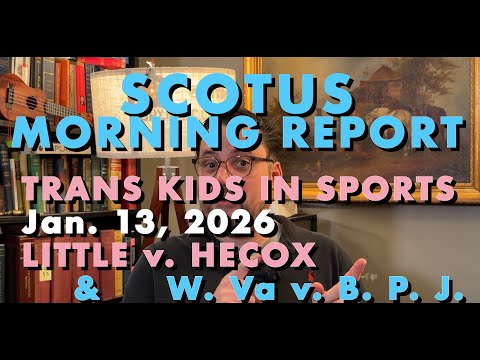
BrynoDC Coverage 1 video
Opinion of the Court
Overview
Overview
A case in which the Court will decide whether Title IX and the Equal Protection Clause allow a state to designate school sports teams for girls and boys based on students' biological sex as determined at birth.
The Facts
Facts
West Virginia enacted H.B. 3293, the Save Women's Sports Act, prohibiting transgender girls from competing on girls' sports teams in public schools. B.P.J., a transgender girl who has taken puberty blockers and estrogen since childhood, participated on a middle school girls' cross-country and track team and brought a Title IX and Equal Protection challenge. The Fourth Circuit ruled in her favor, and the case was consolidated with Little v. Hecox to resolve the circuit split.
The Issue
Issue
Whether West Virginia's Save Women's Sports Act, which excludes transgender girls from competing on girls' athletic teams in public schools, violates Title IX or the Equal Protection Clause as applied to a transgender girl who has undergone puberty suppression and hormone therapy from early childhood.
The Rules
Rule
Title IX's athletics regulations (34 C.F.R. § 106.41) permit single-sex sports teams where selection is based on competitive skill or contact sport safety considerations. The Equal Protection Clause's intermediate scrutiny standard requires sex-based distinctions to be substantially related to an important governmental interest. Bostock v. Clayton County, 590 U.S. 644 (2020), held that Title VII's prohibition on sex discrimination encompasses gender identity.
The Application
Analysis
West Virginia argues its law classifies on biological sex. A legitimate basis for organizing athletics. Title IX expressly permits 'reasonable provisions considering the nature of particular sports.' The 1972 Congress understood 'sex' as biological sex, and Bostock's Title VII reasoning does not extend to Title IX's different regulatory structure and legislative history.
The Conclusion
Conclusion
Issued in conjunction with WV v BPJ. The states did not violate the constitution nor title IX.
Flag an issue
This tracker is maintained by BrynoDC and is free because readers fund it. Support