
Trump v. Dow Jones Company
Judge Gayles dismissed the original complaint without prejudice, holding that Trump, as a public figure, had not plausibly alleged actual malice under New York Times v. Sullivan. The court granted leave to amend and allowed limited discovery on actual malice.
Trump filed a First Amended Complaint. The defendants then moved again to dismiss the amended complaint and to stay discovery pending that ruling; both motions were fully briefed.
The motions were argued at a 90-minute hearing before Judge Gayles. The judge voiced skepticism, questioning whether Trump had shown financial harm and calling the pleading 'conclusory'; he did not rule from the bench but indicated a ruling would come soon, and he agreed to stay discovery.
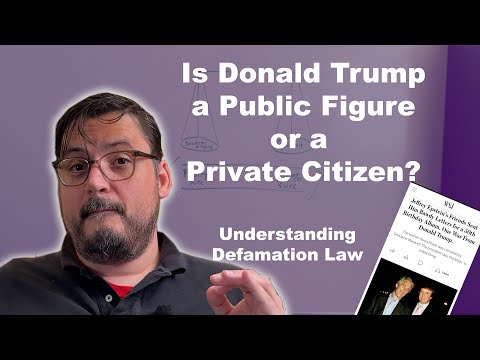
BrynoDC Coverage 5 videos
 YouTube

Overview
Overview
Trump v. Dow Jones Company is an active federal district court defamation case filed by former President Donald Trump against Dow Jones and Company, publisher of The Wall Street Journal. The case is in active litigation and does not yet have a final disposition.
The Facts
Facts
The former President filed a defamation suit against Dow Jones, alleging that The Wall Street Journal published false and defamatory statements about him. The case involves questions about the applicable constitutional standards for defamation claims by a public figure, including the actual malice standard established in New York Times Co. v. Sullivan. The district court proceedings are ongoing.
The Issue
Issue
The central legal questions include whether the challenged publications constitute defamation under applicable standards, including the actual malice standard that applies to public figures under the First Amendment, and whether the defendant can establish truth or other defenses. Procedural questions about discovery and the scope of defamation claims against a major news organization are also at issue in the active litigation.
The Rules
Rule
Under New York Times Co. V. Sullivan, a public official or public figure bringing a defamation claim must prove that the defendant made the statement with actual malice: knowledge that the statement was false or with reckless disregard for its truth or falsity. Active case. Final legal standards will be determined through the litigation.
The Application
Analysis
As a public figure, Trump bears the burden under Sullivan of proving that Dow Jones published the disputed statements with actual malice. That is, with knowledge they were false or with reckless disregard for their truth or falsity. This requires more than demonstrating the statements were false; Trump must present evidence of Dow Jones's subjective awareness of probable falsity or a deliberate avoidance of the truth. Discovery will likely focus on the editorial process, the WSJ's sources and fact-checking procedures, and any evidence of intent to harm or conscious indifference to accuracy. The case will turn on whether Trump can establish the defendant's state of mind at the time of publication, a threshold that has historically proven difficult for public figures to meet in media defamation cases.
The Conclusion
Conclusion
Trump v. Dow Jones is an active defamation case with no final resolution. Bryan tracks it as part of coverage of litigation involving the current administration and major media organizations. This entry will be updated as the case progresses through the district court and any appellate proceedings.
Flag an issue
This tracker is maintained by BrynoDC and is free because readers fund it. Support